
with Best Ground Clearance
Looking for the best used SUVs with best ground clearance. This guide explains what ground clearance is, why it matters for snow, ruts, steep driveways, and trailheads, and which used SUV models and trims deliver the extra height you want without sacrificing day to day comfort. We highlight smart choices across budgets, from adventure ready compacts to durable body on frame 4x4s, and show how clearance varies by year and trim. You will also find practical tips on measuring real world clearance, tire choices, and what to inspect underneath before you buy. Ready to compare options. Browse models on used-inventory, check trade value on value-my-trade, and study reliability on most-reliable-used-suvs. When you are finished researching, explore more buying advice on how-to-buy-a-used-car and used-car-inspection-checklist to shop confidently.
Ground clearance is more than a number. It helps protect underbody components and keeps you moving when roads get rough or snow piles up. In the sections below, we break down ideal clearances by use case, call out trims with extra height like Trailhawk, TRD Off Road, Z71, AT4, and share inspection tips to verify height and condition. Explore related guides on best-used-off-road-suvs, best-used-awd-vehicles, and best-used-3-row-suvs.
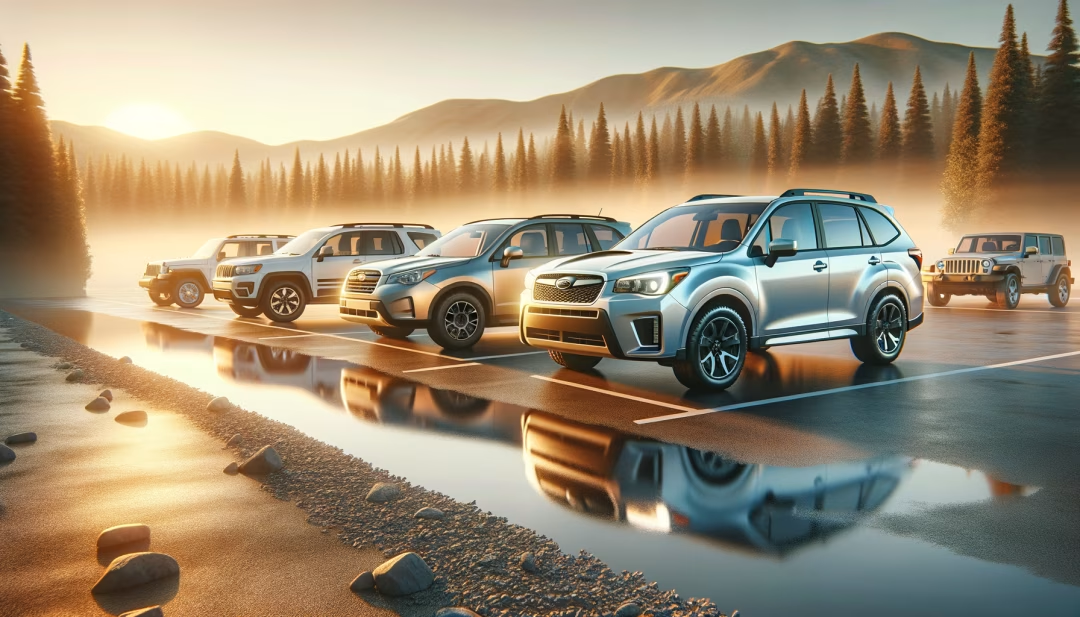
What ground clearance means and why it matters
Ground clearance is the distance between the lowest fixed point under a vehicle and the ground. On SUVs this lowest point is often a differential, exhaust crossover, or subframe. More clearance helps you clear snow ruts, speed bumps, crowned gravel, or rocky trail sections without scraping. It also gives you a margin on steep driveway aprons and boat ramps. Beyond the static number, capability also depends on approach, breakover, and departure angles, which describe how steep an obstacle you can enter, crest, or exit without contact. If you plan to explore forest roads or unmaintained routes, pay attention to these angles and to underbody protection like skid plates.
How much ground clearance do you need
- City and mild winters: around 7.5 to 8.5 inches helps with plow berms and parking lot piles.
- Snow belt and rough gravel: 8.5 to 9.5 inches reduces scraping and protects underbody parts.
- Forest roads and light overlanding: 9.5 to 10.5 inches plus decent approach and departure angles is ideal.
- Technical off road: 10 inches or more, low range 4WD, all terrain tires, and skid plates.
Clearance is only part of the picture. Traction systems matter too. All wheel drive helps you get moving and keep momentum, while traditional 4WD with low range helps with slow speed control. For more on AWD options, visit best-used-awd-vehicles and used-cars-with-all-wheel-drive.
Top used SUVs known for strong ground clearance
The models below are well regarded for higher than average clearance. Actual numbers vary by year, tire size, and suspension options, so confirm the spec on the exact vehicle. Trims named with off road packages often sit higher or include protective hardware.
- Toyota 4Runner: Body on frame SUV with around 9 to 9.6 inches and excellent approach and departure angles. TRD Off Road and TRD Pro add protection and traction aids.
- Jeep Wrangler: Typically 9 to over 10 inches depending on trim. Rubicon models add lockers, 33 inch tires, and heavy duty components for serious trails.
- Jeep Grand Cherokee: Many trims clear 8.6 to 10 plus inches when equipped with Quadra Lift air suspension. Trailhawk adds off road tuning and protection.
- Subaru Forester and Crosstrek: About 8.7 inches on most years, a sweet spot for snow and uneven roads while keeping a car like ride and economy.
- Toyota RAV4 Adventure and TRD Off Road: Around 8.6 inches, with slightly more aggressive tires and added drive modes for loose surfaces on select trims.
- Honda Passport: Typically around 8 inches, with solid approach and departure geometry and a strong torque vectoring AWD system for trailheads and snow.
- Chevrolet Tahoe and GMC Yukon: Full size SUVs with around 8 to 8.5 inches. Z71 and AT4 packages add off road oriented features and a bit more height in some years.
- Nissan Xterra and Pathfinder older 4x4: Often 8.3 to 9.5 inches on certain years and trims, good for rugged trails if you prefer a simpler truck like setup.
- Ford Bronco Sport Badlands: Around 8.8 inches with advanced traction modes and underbody protection, great for exploring unpaved routes.
For more lists of capable options, see best-used-off-road-suvs, best-used-crossover-suvs, and best-used-full-size-suvs. If you want three row flexibility, compare best-used-3-row-suvs for models that balance clearance with passenger space.
Best ground clearance picks by budget
Pricing varies by mileage, condition, location, and features. The ranges below describe common patterns so you can shortlist candidates within your budget. Check current availability on used-inventory and review recently sold examples on sold-inventory.
- Under 15000: Subaru Forester and Crosstrek with 8.7 inches, older Toyota 4Runner high mileage examples, Jeep Wrangler TJ or JK with simple suspensions, and Nissan Xterra for rugged value. See best-used-suvs-under-15000.
- Under 20000: Later Subaru Forester and Crosstrek, Toyota RAV4 Adventure, Honda Passport higher mileage, early Jeep Grand Cherokee Trailhawk. Explore best-used-suvs-under-20000 and most-reliable-used-suvs.
- 20000 to 30000: Newer 4Runner SR5 and TRD Off Road, Wrangler JL Sport and Sahara, RAV4 TRD Off Road, Bronco Sport Badlands, and Chevy Tahoe or GMC Yukon with Z71 or AT4 packages depending on year. Also see best-used-luxury-suvs if you want air suspension adjustability.
Trims and packages that add height and protection
- Toyota TRD Off Road and TRD Pro: Added ride height on some models, tuned suspension, and underbody armor.
- Jeep Trailhawk and Rubicon: Increased clearance on certain models, all terrain tires, rock rails, and enhanced traction aids.
- Chevrolet Z71 and GMC AT4: Trail focused packages that may increase effective clearance and add skid plates and recovery points.
- Subaru Wilderness trims: Forester and Outback Wilderness offer additional clearance and upgraded off road tuning compared to standard trims.
How tire size, suspension, and payload affect real world clearance
The number on a spec sheet assumes original tire diameter, factory suspension height, and no load. Larger diameter tires can raise the lowest point slightly, but changes in width or wheel offset may reduce fender clearance on compression. Worn shocks, tired springs, or heavy cargo can lower effective height by an inch or more. If a used SUV has aftermarket lift components, inspect alignment records and look closely for accelerated tire wear or driveline vibration. Modifications can impact insurance, emissions compliance, and warranty coverage on some components. When possible, test drive on the surfaces you use most and listen for rubbing over speed bumps or during tight turns.
Inspection checklist for a used SUV with ground clearance in mind
- Underbody: Look for scrapes at the front subframe, exhaust crossover, differential housings, and fuel tank area. Light scuffs are normal, deep dents are not.
- Suspension: Check struts or shocks for leaks and springs for sag. Uneven fender gaps may indicate damage or worn components.
- Tires: Confirm load rating and size match door jamb or a safe equivalent. Uneven wear can indicate alignment issues from curb or trail impacts.
- Alignment and steering: A straight highway track and centered steering wheel suggest healthy geometry. Pulling or vibration calls for inspection.
- Driveline: Inspect CV boots, u joints, transfer case, and differentials for leaks or play, especially on vehicles used off pavement.
For a deeper walkthrough, open used-car-inspection-checklist and how-to-avoid-buying-a-bad-used-car. If you want professional help after purchase, schedule-service can assist with alignments, tires, and protective upgrades.
How to verify ground clearance on the exact vehicle
- Park on level pavement and measure from the lowest fixed point to the ground using a straightedge and tape measure.
- Confirm tire size on the sidewall matches the window sticker or build sheet. A smaller than stock tire can reduce clearance.
- Check approach and departure by viewing bumper to tire height and noting hitch or air dam hang down points.
Safety and comfort considerations
More height can raise a vehicles center of gravity. Choose models with stability control and well tuned suspensions for confident handling. Look for all season or all terrain tires with the 3 Peak Mountain Snowflake symbol if you regularly drive in winter conditions. For crash test research and safety tech checklists, visit used-cars-with-best-safety-ratings, safest-used-suvs, and used-cars-with-best-crash-test-ratings.
Compare by lifestyle and seating needs
Solo explorers and couples often fit well in compact crossovers with around 8.5 to 9 inches of clearance for trailhead access and snow. Families or towing duties may call for midsize or full size SUVs with stronger cooling, frames, and suspension hardware even if published clearance is a bit lower. If you plan frequent camping or road trips, see best-used-vehicles-for-outdoor-adventures, best-used-3-row-suvs, and best-used-vehicles-for-towing.
Reliability and ownership costs
A durable SUV with decent clearance beats a tall SUV that spends time in the shop. Cross check candidates on most-reliable-used-suvs, most-reliable-used-toyota-models, most-reliable-used-honda-models, and used-cars-with-lowest-maintenance-costs. To estimate long term value, explore used-cars-with-best-resale-value and used-cars-with-lowest-cost-of-ownership. When you are ready to run the numbers, read how-to-finance-a-used-car, payment-options, and used-car-loan-interest-rates.
Helpful resources
- Browse inventory: Used Inventory
- Research more lists: Best Used Off Road SUVs, Best Used AWD Vehicles, Best Used 3 Row SUVs, Best Used SUVs
- Buyer guides: How to Buy a Used Car, Used Car Inspection Checklist, How to Avoid Buying a Bad Used Car, Certified Pre Owned vs Used
- Ownership help: Schedule Service, Payment Options, Value My Trade, Contact Us
- Learn more on our blog: Blog and Research Hub
FAQ: Best used SUVs with best ground clearance
Explore more and plan your next steps
Continue your research on best-used-suvs, most-popular-used-suvs, and used-cars-with-high-mpg if fuel economy is a priority. To estimate trade equity, open value-my-trade. If you have questions about availability or features, reach out on contact-us or learn about our team on meet-our-staff. For policies, visit privacy-policy, terms, and visitor-agreement. When you are ready, find a nearby showroom on locations and prepare a route that includes real world surfaces you drive every week so you can confirm clearance and comfort in one visit.
Office Hours
Monday
Tuesday
Wednesday
Thursday
Friday
Saturday
9:00 am - 5:00 pm
9:00 am - 5:00 pm
9:00 am - 5:00 pm
9:00 am - 5:00 pm
9:00 am - 5:00 pm
Closed
