
Reliability, Value, and Features Guide
Searching for the best used Toyota RAV4 years is a smart move if you want a compact SUV that blends long-term reliability, strong resale value, and budget-friendly ownership. Shoppers often gravitate to 2016 to 2018 models for their proven dependability and Toyota Safety Sense features, while the fully redesigned 2019 to 2021 generation brings modern tech, improved ride quality, and standout Adventure and TRD Off-Road trims. If fuel savings are a priority, the RAV4 Hybrid from 2016 to 2018 and 2019 to 2021 delivers excellent mileage without sacrificing utility. Drivers who want extra power sometimes consider the 2010 to 2012 RAV4 with the available V6, prized for robust performance. Use this guide to compare trims, features, common issues, and ownership costs across model years. For broader shopping insights, visit most-reliable-used-toyota-models and best-used-midsize-suvs, and review current choices in used-inventory.
Evaluating a specific RAV4 is easier with a plan. Verify maintenance records, ensure recall work is complete, and inspect tires, brakes, suspension, and underbody for rust. For hybrids, confirm warranty details and battery health history. Look for smooth transmission shifts, consistent steering feel, and quiet cabin operation during a test drive. Compare features like adaptive cruise, blind spot monitoring, and smartphone integration. Helpful resources: used-car-buying-checklist, used-car-inspection-checklist, used-car-warranty-guide, and how-to-check-used-car-history.
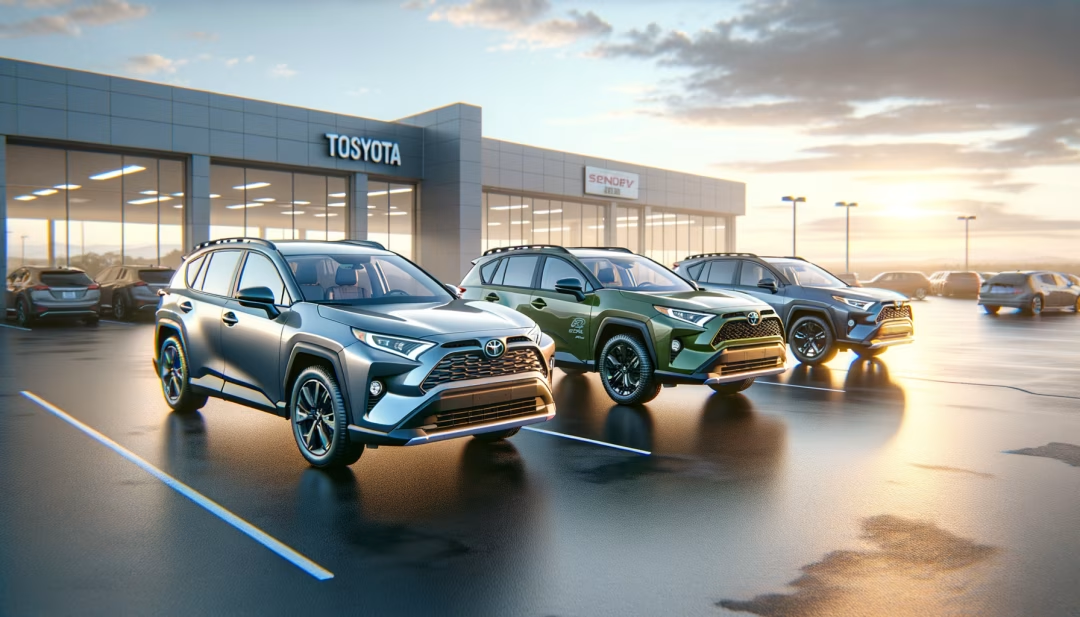
Why the Toyota RAV4 is a smart used SUV
The Toyota RAV4 consistently ranks among the most popular used SUVs because it delivers a rare mix of everyday comfort, family-friendly space, strong reliability, and standout resale value. Model year to model year, it offers predictable ownership costs, practical cargo space, and an easy driving experience in the city or on the highway. With choices that include capable all-wheel drive systems and fuel-sipping hybrid trims, a used RAV4 can meet a wide range of needs without straining your budget.
- Proven reliability and high owner satisfaction across multiple generations
- Strong resale value that helps protect your investment over time
- Available AWD systems that enhance confidence in rain and snow
- Hybrid options with excellent fuel economy and low running costs
Best used Toyota RAV4 years at a glance
While many RAV4 model years are good choices, several stand out based on reliability scores, features, and ownership value:
- 2016 to 2018: A sweet spot for value with available Toyota Safety Sense, a comfortable ride, and the first RAV4 Hybrid options in this generation.
- 2019 to 2021: Fully redesigned platform with upgraded safety tech, improved cabin materials, Apple CarPlay from 2019 and Android Auto from 2020, plus Adventure and TRD Off-Road trims.
- 2017 to 2018 Hybrid: Excellent fuel economy with e-AWD capability and historically strong hybrid durability from Toyota.
- 2010 to 2012 (select trims): Optional V6 provides strong acceleration and higher towing potential for drivers who want extra power.
If you are cross-shopping, compare choices in best-used-awd-vehicles and best-used-midsize-suvs to see how the RAV4 stacks up against rivals.
Generation overview and model year insights
2019 to 2021: Redesigned, feature-rich, and efficient
The 2019 redesign ushered in a more rugged look, a stiffer platform, and a quieter cabin. Standard advanced safety features expanded, and connectivity improved. Apple CarPlay arrived in 2019, and Android Auto followed for 2020 and newer models. The Adventure and TRD Off-Road trims offer enhanced capability, with available torque-vectoring AWD and higher towing potential when properly equipped. The 2019 to 2021 RAV4 Hybrid pairs excellent fuel economy with confident e-AWD traction.
- Strengths: Refined ride, modern driver assistance, efficient hybrid, spacious cargo area, improved interior materials.
- Notes: Early 2019 models can exhibit transmission hesitation, and some 2019 to 2020 Hybrids had fuel tank fill concerns. Confirm applicable service campaigns were completed.
2013 to 2018: Value leader with first RAV4 Hybrid
This generation delivers dependable performance and practical features at attractive prices. The 2016 refresh brought available Toyota Safety Sense technologies and introduced the RAV4 Hybrid. Many shoppers target 2016 to 2018 for the best blend of cost, features, and reliability. Earlier years in the cycle can be solid as well, but inspect for typical age-related wear and ensure infotainment and safety tech meet your expectations.
- Strengths: Comfortable ride, useful cargo room, available advanced safety from 2016, strong reliability record, hybrid efficiency.
- Notes: Older infotainment systems feel dated; check for wind or road noise on high-mileage examples and verify suspension and brake wear.
2010 to 2012: Available V6 power and optional third-row
For drivers who want more power or occasional three-row flexibility, 2010 to 2012 RAV4 models are worth a look. The available V6 is known for robust performance and can be appealing for light towing. These models lack newer safety suites and modern infotainment, but their simplicity can reduce long-term maintenance costs if well maintained.
- Strengths: Strong V6 option, durable drivetrains, available third-row on some configurations.
- Notes: Prioritize examples with thorough service records; inspect cooling system, tires, and suspension components due to age.
Trims and features to look for
Toyota offered a wide range of RAV4 trims over the years. Matching features to your needs helps you identify the best value:
- LE: Budget-friendly with the essentials; a good choice for lower purchase price and simplicity.
- XLE and XLE Premium: Popular balance of comfort and features, often with power driver seat, dual-zone climate, and upgraded wheels.
- Limited: Adds upscale touches like leather upholstery, premium audio, and advanced driver aids depending on year.
- Adventure and TRD Off-Road: More rugged look and capability, available torque-vectoring AWD, and higher towing potential in recent generations.
- Hybrid variants: Standout fuel economy, e-AWD traction, and smooth power delivery.
RAV4 Hybrid highlights
Toyota’s hybrid reputation makes the RAV4 Hybrid especially appealing as a used buy. The 2016 to 2018 models brought notable efficiency gains to the fourth generation, while the 2019 to 2021 Hybrids improved refinement further. Hybrids feature e-AWD that uses an electric motor on the rear axle, improving traction without a traditional driveshaft. Battery systems are engineered for longevity, but confirming service records and any hybrid-related warranty coverage adds peace of mind.
- Excellent fuel economy compared to non-hybrid RAV4s, especially in city driving.
- Smooth, quiet operation with strong low-speed response.
- Check for completed campaigns on 2019 to 2020 hybrids related to fuel tank filling.
If you are comparing electrified options across brands, visit best-used-hybrid-cars and best-used-electric-vehicles for a broader perspective.
AWD systems and winter confidence
RAV4 offers multiple AWD systems depending on year and trim. Many 2013 to 2018 models use a predictable on-demand setup that balances fuel economy with traction. Select 2019 and newer trims offer a more advanced torque-vectoring AWD with a rear driveline disconnect to reduce drag at cruising speeds. For frequent winter driving, a set of quality all-season or winter tires complements the AWD system extremely well. Learn more about winter-ready picks at best-used-vehicles-for-winter-driving and best-used-cars-for-snow.
Ownership costs and fuel economy
One of the reasons the RAV4 is consistently popular is its low total cost of ownership. Routine maintenance is straightforward, parts are widely available, and Toyota reliability helps avoid major surprise expenses when serviced on schedule.
- Typical fuel economy: many non-hybrid RAV4s return roughly mid to upper 20s combined, while hybrids frequently achieve mid to upper 30s combined depending on driving style and model year.
- Insurance and maintenance costs are generally reasonable for the segment, especially for 2016 to 2018 models with mature parts availability.
For deeper research on budgeting, try used-cars-with-lowest-cost-of-ownership and used-cars-with-best-resale-value.
What to inspect on a used RAV4
A thorough evaluation helps you choose the right example with confidence. Bring a checklist and take a calm, methodical approach to your walkaround and drive.
- Service history: Look for consistent oil changes, fluid services, brake work, and hybrid system checks where applicable.
- Test drive: Confirm smooth, predictable shifts, no clunks over bumps, straight tracking, and quiet braking without vibration.
- Technology: Verify functionality of adaptive cruise control, lane departure warning or lane tracing assist, blind spot monitoring, CarPlay or Android Auto, and backup camera clarity.
- Tires and suspension: Uneven tire wear can indicate alignment or suspension issues; inspect struts, control arms, and bushings for age and mileage wear.
- Hybrids: Request hybrid system diagnostics and confirm any battery-related warranties or service campaigns.
Use tools like how-to-check-used-car-history and used-car-inspection-checklist to prepare. If you plan to finance, see how-to-finance-a-used-car and used-car-loan-interest-rates for guidance.
Common issues to be mindful of
The RAV4 is widely regarded as reliable, but like any vehicle, certain years have known concerns. These items are not universal, yet they are helpful checkpoints during evaluation:
- 2019 transmission feel: Some early 2019 models may exhibit hesitation or abrupt shifting. Check software updates or any related service records.
- 2019 to 2020 Hybrid fuel tank fill: Confirm that applicable service campaigns have been performed and that full fill capacity is achievable.
- 2013 to 2015 interior and infotainment: Inspect for wear on cabin materials and confirm the multimedia system meets your needs.
- 2006 to 2009 four-cylinder oil consumption: Some vehicles with the 2.4L four-cylinder from this era may have higher oil consumption. Check records and inspect accordingly.
Mileage vs model year: What matters more
Choosing between a newer high-mileage RAV4 and an older low-mileage one depends on maintenance and condition. A well-serviced model with higher miles can be a better long-term choice than a neglected vehicle with low miles. For budget targeting, consider best-used-suvs-under-15000 or best-used-suvs-under-20000 to align features and price. To estimate trade-in value of your current vehicle, visit value-my-trade, and browse used-inventory for examples that match your criteria.
RAV4 vs other used SUVs
The RAV4 competes closely with the Honda CR-V, Subaru Forester, and Mazda CX-5. Each has strengths: the CR-V is known for space and efficiency, the Forester for visibility and standard AWD, and the CX-5 for sporty handling and upscale cabins. The RAV4 stands out for reliability breadth across many years, hybrid availability, and strong resale. For category overviews, explore best-used-suvs, most-reliable-used-suvs, and used-cars-with-best-resale-value.
Helpful links for deeper research
Frequently asked questions about the best used Toyota RAV4 years
Explore more resources
Continue your research with research-page-template, browse used-inventory, compare budget picks in best-used-cars-under-20000, and learn negotiation tips in how-to-negotiate-a-used-car-price. For dealer policies and information, visit about-us, privacy-policy, terms, and visitor-agreement.
Office Hours
Monday
Tuesday
Wednesday
Thursday
Friday
Saturday
9:00 am - 5:00 pm
9:00 am - 5:00 pm
9:00 am - 5:00 pm
9:00 am - 5:00 pm
9:00 am - 5:00 pm
Closed
