
Best Towing Capacity Guide
If you need serious pulling power without the new truck price, this guide to the best used trucks with best towing capacity will help you choose with confidence. We break down real world tow ratings, engines, axle ratios, and key packages so you can match a truck to your boat, camper, or work trailer. From proven half ton favorites to heavy duty diesel legends, you will learn what to look for, what years to target, and how to verify the rating on the exact truck you are considering. Browse our used inventory on used-inventory, see towing focused research on best-used-vehicles-for-towing, and compare top models on best-used-trucks. Use this page as your checklist before you visit or test drive so you bring home the right truck the first time.
Ready to plan your purchase journey after you choose a tow ready truck. Estimate payments on payment-options, apply securely on applications, and see what your current vehicle is worth on value-my-trade. When you are set to experience a truck in person, pick a time on schedule-a-test-drive or find a nearby store on locations. For more shopping tips, visit blog or contact-us.
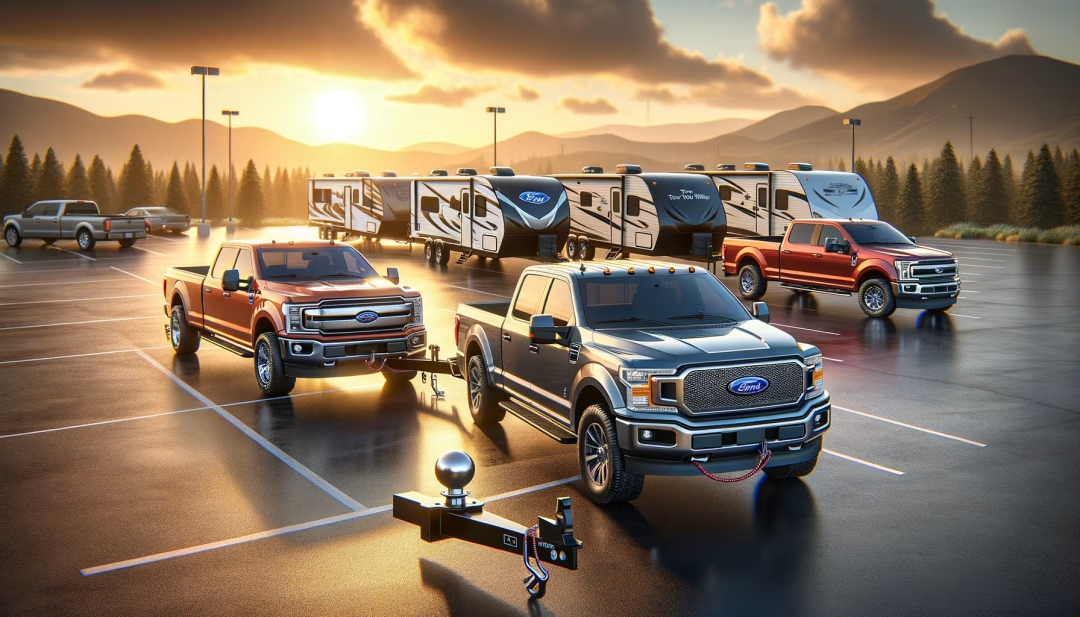
What Towing Capacity Really Means
Towing capacity is the maximum weight a properly equipped truck can pull safely as defined by the manufacturer. It depends on engine output, transmission, cooling, brakes, axle ratio, suspension, tires, wheelbase, and whether the truck has the factory tow or max tow package. Always verify the rating for the specific truck using the door jamb tire and loading sticker, the VIN specific towing guide, or the owner manual. Two trucks with the same badge can have very different tow limits based on configuration.
- Key weights to know: GVWR (truck max weight), GCWR (truck plus trailer max), payload (how much weight the truck can carry), and tongue weight (typically 10 to 15 percent of trailer weight for conventional hitches).
- A higher axle ratio (for example 3.55, 3.73, 4.10) usually increases tow capacity but can reduce highway fuel economy slightly.
- Max tow or trailering packages often add upgraded cooling, hitch hardware, wiring, integrated trailer brake controller, and sometimes a different rear axle ratio.
Top Used Trucks For Maximum Towing Power
Below are common used truck choices known for strong towing. Ratings vary by year, engine, cab, bed, drivetrain, and axle ratio. Use this as a starting point, then confirm the exact rating on the truck you are evaluating.
- Ford Super Duty F 250 and F 350 (6.7L Power Stroke diesel, select gas V8s): Excellent for heavy campers and equipment. Properly equipped diesel models can exceed 15,000 pounds conventional and go far higher with fifth wheel or gooseneck setups in certain years.
- Ram 2500 and 3500 (6.7L Cummins diesel, 6.4L Hemi): Known for torque and stable towing. Many configurations tow in the teens with conventional hitches and even higher with fifth wheel or gooseneck hardware when properly equipped.
- Chevrolet Silverado 2500 HD and 3500 HD and GMC Sierra 2500 HD and 3500 HD (6.6L Duramax diesel, 6.6L gas): Strong frames, Allison transmissions in many Duramax years, and excellent cooling. Capable of very high tow ratings depending on configuration.
- Ford F 150 (3.5L EcoBoost, 5.0L V8, Max Tow): A top used half ton for towing. Well equipped EcoBoost trucks can tow around the low to mid teens in pounds in certain recent generations with the Max Tow package.
- Chevrolet Silverado 1500 and GMC Sierra 1500 (5.3L V8, 6.2L V8, Max Trailering): Many trims deliver five digit tow ratings when equipped with the Max Trailering package and the right axle ratio.
- Ram 1500 (5.7L Hemi, 3.0L EcoDiesel): Smooth ride and solid capabilities. Properly equipped Hemi trucks can reach strong conventional tow figures for a half ton.
- Toyota Tundra (5.7L V8 or newer iForce engines): Simple and durable drivetrains with competitive tow ratings for most campers and boats.
Best Engines And Years To Target
When shopping used for towing, the right engine and transmission pairing matters as much as the badge. The following combinations are popular among owners for dependable pull, cooling, and gear ratios. Availability varies by model year.
- Ford 3.5L EcoBoost V6 in F 150 with Max Tow (10 speed in newer years): Strong low end torque, confident passing at altitude, and good balance of power and efficiency when not towing.
- GM 6.2L V8 in Silverado 1500 or Sierra 1500 with Max Trailering: High horsepower and robust tow packages when optioned correctly. Look for 8 speed or 10 speed years for improved drivability.
- Ram 5.7L Hemi with 8 speed: Smooth shifts and strong pull. The 3.92 axle ratio trucks are favored for heavier campers within half ton limits.
- Heavy duty diesels (6.7L Power Stroke, 6.7L Cummins, 6.6L Duramax): Excellent for frequent or high weight towing, mountain routes, and fifth wheel or gooseneck loads. Diesel maintenance is higher but so is capability and braking control via engine braking features.
How To Choose The Right Used Truck For Your Trailer
Start with your real trailer weight. Do not use just the brochure dry weight. Add cargo, water, fuel, propane, and gear. A good rule for a conventional travel trailer is 10 to 15 percent tongue weight. That tongue weight must fit within the truck payload after accounting for passengers and accessories. For fifth wheel trailers, pin weight is often 15 to 25 percent, which is why many buyers step up to three quarter ton or one ton trucks for stability and payload headroom.
- Calculate loaded trailer weight and tongue or pin weight before shopping so you set realistic targets for GVWR, GCWR, and payload.
- Longer wheelbase trucks typically tow more stably, especially with longer trailers. Crew cab long bed models often feel more composed.
- Two wheel drive usually tows slightly more than four wheel drive because it weighs less, but 4x4 is helpful on ramps, campsites, and winter roads.
Must Have Tow Features To Look For
Factory tow or max tow packages are worth seeking out on the used market. They add hardware and cooling that make long grades and hot days less stressful. Many modern trucks also include camera and stability tech that takes the guesswork out of trailer hookups and lane changes.
- Integrated trailer brake controller and 7 pin wiring
- Heavy duty hitch receiver and weight distributing hitch compatibility
- Transmission and engine oil coolers with tow or haul mode programming
- Tow mirrors, trailer blind spot monitoring, and multi angle camera views
- Integrated bed pucks or rails for fifth wheel or gooseneck (on heavy duty trucks)
Used Truck Inspection Tips For Towing Duty
Towing adds heat and stress. A careful inspection helps you choose a truck that is ready for the load. Ask for maintenance records and look closely at components that work hardest while towing.
- Cooling system: Check for fresh coolant, radiator condition, fan operation, and clean condenser and intercooler fins on turbo models.
- Transmission: Verify smooth shifts hot and cold, no burnt fluid smell, and that tow or haul mode engages properly. Service history is a plus.
- Brakes and tires: Measure pad depth, rotor condition, tire load rating, and age. Trailer rated tires and fresh brake fluid improve confidence on grades.
- Suspension and steering: Look for worn bushings, shocks, leaf springs, and ball joints. A level stance with load is key for stability.
- Hitch and wiring: Inspect the receiver for rust or damage, verify 7 pin output, and test the integrated brake controller with a trailer if possible.
Half Ton Or Heavy Duty For Towing
Half ton trucks are excellent for boats, utility trailers, and many travel trailers when configured with the right engine, axle ratio, and tow package. If your loaded trailer weight begins to approach the higher half ton ratings or your pin weight exceeds payload, step up to a three quarter ton. Heavy duty frames, brakes, and cooling give you margin on long grades and in headwinds, and diesel exhaust braking can reduce brake wear on descents.
Reliability, Fuel Economy, And Cost
Beyond capability, consider long term ownership. Maintenance for heavy duty diesels can cost more per service, but many owners appreciate the torque and engine braking for frequent towing. Gas trucks are simpler and can be more affordable to buy and maintain, especially if you only tow a few times per month. See reliability and economy insights on most-reliable-used-trucks and used-trucks-with-best-fuel-economy. For total ownership costs, explore used-cars-with-lowest-maintenance-costs and used-cars-with-lowest-cost-of-ownership.
Verify The Exact Rating On The Truck You Choose
Once you have a candidate truck, confirm the exact tow and payload ratings. Look at the yellow tire and loading sticker for payload, check the axle ratio on the axle tag or window sticker, and use the manufacturer VIN specific towing guide when available. If in doubt, ask our team to decode the VIN and verify the package details on research-page-template or at the store.
Helpful Resources
Explore these pages to continue your research and prepare for ownership.
- Used Inventory: Used Inventory
- Best Used Vehicles For Towing: Best Used Vehicles For Towing
- Best Used Trucks For Work: Best Used Trucks For Work
- Most Reliable Used Trucks: Most Reliable Used Trucks
- Used Trucks With Best Fuel Economy: Used Trucks With Best Fuel Economy
- Research and How To Guides: How To Buy A Used Car, Used Car Buying Checklist, How To Finance A Used Car
- Trade, Test Drive, And Locations: Value My Trade, Schedule A Test Drive, Locations
- More Topics: Blog, About Us, Contact Us
Frequently Asked Questions About Used Trucks With Strong Towing
Office Hours
Monday
Tuesday
Wednesday
Thursday
Friday
Saturday
9:00 am - 5:00 pm
9:00 am - 5:00 pm
9:00 am - 5:00 pm
9:00 am - 5:00 pm
9:00 am - 5:00 pm
Closed
