
Guide: Pricing Trends and Buying Insights
Curious what a fair price looks like for a pre-owned Ford F-150 in today’s market. This Ford F-150 used market value guide explains how mileage, model year, trim, engine, options, condition, and location impact pricing so you can shop and sell with confidence. We break down real world value drivers, typical price ranges by year, and tips to estimate trade in and retail figures. You will also find links to research tools, valuation steps, and ownership cost guidance tailored to the F-150. Whether you are exploring budget work trucks, higher trim 4x4 models, or specialty packages for towing, this page helps you understand where value comes from and how to compare listings. Browse our used inventory insights, discover value building features, and learn how to validate a price before you visit the lot.
Ready to dig into the numbers and the why behind them. Start below with key factors that move Ford F-150 prices.
The Ford F-150 has strong demand and wide price variation due to trims like XL, XLT, Lariat, King Ranch, Platinum, and Raptor, plus multiple engines and bed configurations. Values shift with mileage bands, service history, accident records, and season. Use our guidance to benchmark fair retail against trade in and to spot features that justify a premium. When you have a figure in mind, compare it to current listings and recent sales for a realistic target range.
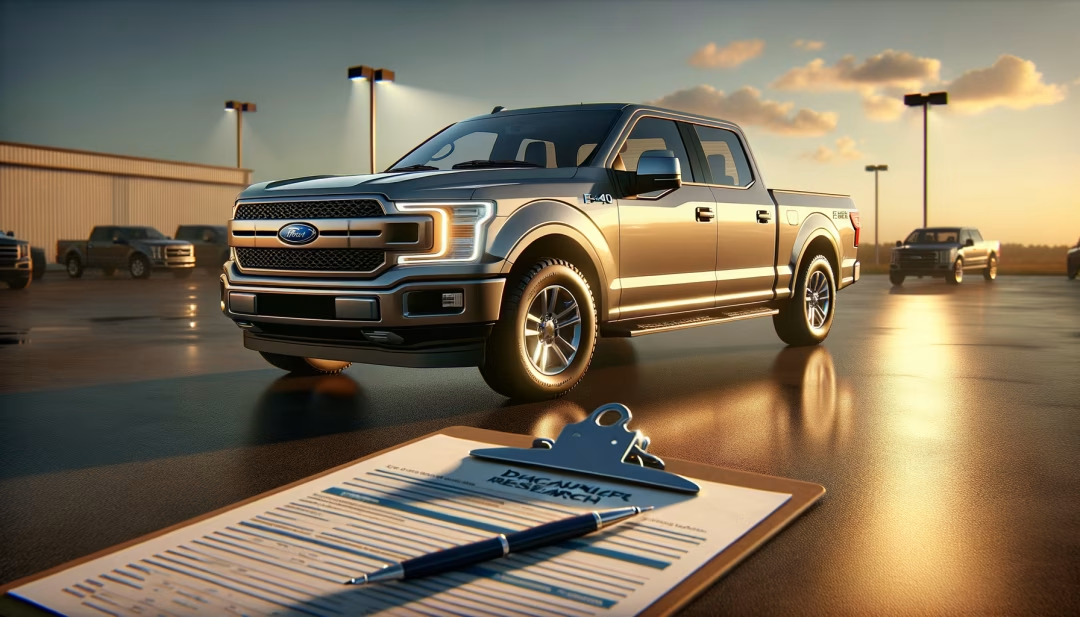
What Drives Ford F-150 Used Market Value
The Ford F-150 is one of the most traded used vehicles in the country, which means there is an active market that rewards the right configurations and condition. Understanding the main value drivers helps you sort strong deals from inflated asks and gives you a clear path to price your own truck competitively.
- Model year and generation updates, including safety tech and infotainment revisions
- Trim level and appearance or luxury packages that boost desirability
- Engine choice, drivetrain, axle ratio, and towing or payload packages
- Mileage bands, service records, and any accident or insurance claims on the history report
- Bed length and cab style mix of utility and comfort for your use case
- Seasonal and regional demand, especially where trucks command a premium
Typical Ford F-150 Used Price Ranges by Year
Prices vary by trim, mileage, options, and location. The ranges below are general retail estimates to frame expectations. Clean history, documented maintenance, and sought after options often land at the upper end.
- 2021 to 2022: approximately 34000 to 58000 for common trims and mileage spreads
- 2018 to 2020: approximately 24000 to 44000 depending on trim and condition
- 2015 to 2017 aluminum body generation: approximately 17000 to 32000
- 2011 to 2014: approximately 11000 to 22000 with moderate mileage and clean records
- 2009 to 2010: approximately 8000 to 15000 conditioned by miles and rust exposure
Specialty models like Raptor and well equipped Platinum or King Ranch trucks can exceed these bands, while work oriented XL models with higher miles may fall below. Market data updates frequently, so always compare against recent local sales and active listings.
Trim and Package Effects on Value
The F-150 lineup spans basic work trucks to luxury cruisers. Trims such as XLT and Lariat often strike the best balance of cost and equipment, driving strong resale. Appearance packages, LED lighting, advanced driver assistance, and larger infotainment screens typically add value, especially on later years where buyers expect modern tech. FX4 Off Road, Max Trailer Tow, and Heavy Duty Payload packages meaningfully influence pricing in areas where towing and off road capability are priorities.
- FX4 package increases appeal with off road tuned shocks, skid plates, and drive modes
- Max Trailer Tow package can command a premium where trailering is common
- Luxury trims with leather, heated and ventilated seats, and premium audio hold value
Engine and Drivetrain Value Considerations
Engine choice affects both fuel costs and buyer demand. EcoBoost turbo engines 2.7L and 3.5L deliver strong torque and towing, while the 5.0L V8 appeals to traditional truck owners and some fleets. The 3.0L Power Stroke diesel has a niche following for highway towing. The hybrid PowerBoost blends performance with efficiency and can lift value in regions with longer commutes or idle time needs. Four wheel drive often commands a premium in snow states or for off road buyers.
- 3.5L EcoBoost and hybrid PowerBoost fetch stronger prices among towing focused buyers
- 2.7L EcoBoost is a value leader for mixed use driving with solid resale
- 5.0L V8 remains desirable for simplicity and sound, especially in certain trims
Mileage, Condition, and History Report Impact
Mileage bands matter. Trucks with under 60k miles often see notable premiums versus 80k to 120k, and large discounts can appear beyond 150k unless service is exceptional. Consistent oil changes, transmission and differential services, and brake or tire documentation all reassure buyers. Accident history reduces value, with structural damage or airbag deployment typically causing the largest hits. Watch for corrosion on frames and beds in rust belt regions. Clean, odor free interiors and minimal cosmetic wear strengthen pricing power.
Seasonality and Location
In areas with winter weather, 4x4 demand tightens supply as temperatures drop. Construction and agricultural regions lean toward higher towing and payload packages year round. Urban markets sometimes favor crew cabs with shorter beds and advanced safety tech for daily driving. Pricing your F-150 should account for these local preferences, not just national averages.
How to Estimate Ford F-150 Used Market Value
Use this process to build a realistic value range for any Ford F-150 you want to buy or sell. This approach cross checks book values with real market behavior and trims noise from outlier listings.
- Confirm the exact VIN, trim, engine, cab and bed, axle ratio, and option packages
- Pull a vehicle history report and verify maintenance records and ownership count
- Compare five to ten local listings with similar specs and miles to find the median ask
- Check recent sold results in your area to anchor against actual transaction prices
- Adjust for condition items tires, brakes, cosmetic work, windshield, and accessories
- Separate trade in and retail numbers. Retail includes recon, marketing, and warranty options
Negotiating With Data
Anchoring your offer to a documented set of comparable listings and recent sales gives you leverage. Note specific option differences when you adjust values, and quantify reconditioning needs with line item estimates. If a vehicle sits on the market longer than average for its segment, time on lot can indicate room for price movement. For more negotiating pointers, visit how to negotiate a used car price.
Financing, Insurance, and Ownership Costs
The lowest sticker price is not always the lowest total cost. Factor interest rates, insurance, fuel economy, maintenance, and expected depreciation into your decision. Useful resources include how does used car financing work, used car loan interest rates, and used cars with lowest cost of ownership. If you plan to trade a current vehicle, see value my trade and used car trade in guide to understand equity and timing.
F-150 Versus Other Used Trucks
The F-150 competes with Silverado 1500, Ram 1500, and others. Many buyers pick the F-150 for broad trim selection, strong resale, and extensive aftermarket support. Cross shop segments and resale patterns with best used trucks, best selling used trucks, and most reliable used trucks. If towing is a priority, compare equipment against best used vehicles for towing and best used trucks for work.
Inspection Tips for Value Protection
A thorough inspection can verify that a seemingly strong deal is truly sound. Use a lift or professional inspection when possible. Inspect frame rails, bed supports, cab mounts, brake lines, and leaf spring perches for corrosion. Check for oil leaks, coolant leaks, and turbo related issues on EcoBoost trucks. Confirm smooth shifting, no vibration under load, and straight tracking at highway speed. Use the used car inspection checklist to structure your review.
Depreciation Patterns
Trucks typically depreciate slower than many cars, and the F-150 is known for steady demand. Newer models can see a sharper early decline that moderates after three to five years, then steps down with mileage thresholds. Market conditions such as supply fluctuations and interest rates can temporarily change the curve. Explore broader patterns at used car depreciation guide and used car market trends.
When a Higher Trim Is Worth It
Paying more up front for a popular configuration can return value at resale. Crew cabs with 4x4, towing packages, and active safety technology often sell quicker and closer to asking price. If you plan to keep the truck for several years, prioritize options that match your real use, not just headline features. Overbuying heavy duty gear you will not use can reduce value gained per dollar spent.
Helpful Research Links
- Browse inventory: used inventory and see recent sales at sold inventory
- Learn about reliable Ford models: most reliable used ford models and year picks at best used ford f150 years
- Budget focused picks: best used trucks under 20000 and average used truck price
- Buying guidance: how to buy a used car, how to value a used car, and used car buying checklist
- Ownership and protection: used car warranty guide, extended warranty for used cars, and used car gap insurance explained
Frequently Asked Questions
Value is driven by local supply and demand for your exact configuration, plus mileage, condition, options, and history. Appraisers compare VIN decoded specs to recent sales and active comps, then adjust for reconditioning costs, season, and regional preferences such as 4x4 or towing packages.
Historically, well kept 2018 to 2020 and 2021 to 2022 models with crew cab 4x4 and desirable packages show strong resale. Special trims like Raptor and luxury models maintain premiums if condition and mileage are favorable. Check best used ford f150 years for detailed model year insights.
Pricing often steps down at bands such as under 60k, 60k to 100k, 100k to 150k, and over 150k. A clean history low mile truck can be worth several thousand more than a similar high mile example. Maintenance records can offset some mileage concerns if major services were completed on time.
Yes. FX4, Max Trailer Tow, Heavy Duty Payload, and advanced safety or tech packages increase demand, especially in regions where off road use and towing are common. The premium depends on local preferences and how complete the package is compared with similar listings.
Markets move weekly based on auction flows, seasonality, interest rates, and fuel costs. Expect meaningful adjustments month to month. Always validate figures with current local comps and recent sales to avoid overpaying or underpricing your trade.
Both sell well. The 3.5L EcoBoost and hybrid PowerBoost are attractive for towing and performance, while the 5.0L V8 appeals to buyers who prefer traditional power delivery. Local demand, maintenance history, and packages paired with the engine often matter more than the engine alone.
Explore More
Keep researching with our in depth resources, inventory, and ownership guides: home, blog, research page template, used vehicles with best owner ratings, used cars with best resale value, and contact us for general questions. For store information and policies, visit about us, privacy policy, terms, and visitor agreement.
Office Hours
Monday
Tuesday
Wednesday
Thursday
Friday
Saturday
9:00 am - 5:00 pm
9:00 am - 5:00 pm
9:00 am - 5:00 pm
9:00 am - 5:00 pm
9:00 am - 5:00 pm
Closed
