
Save on Maintenance and Own with Confidence
Smart shoppers look beyond the sticker price. If you want true low cost ownership, focus on used cars with the cheapest parts and easy service. Models with widely available components, strong aftermarket support, and simple designs make routine upkeep far more affordable. In this guide, we explain which vehicles traditionally offer the lowest parts costs, how to compare maintenance expenses, and what to check before you buy. You will also find links to research pages, service insights, and ownership tools to help you estimate budgets with real numbers. Browse our used inventory, compare total cost insights with used cars with lowest maintenance costs, and learn how to inspect before you sign with used car buying checklist. When you are ready to plan your payment, see payment options and get prepped with applications for a faster visit.
Parts pricing matters more over years of ownership than most buyers realize. Vehicles with common engines and high production volumes benefit from budget friendly aftermarket parts and faster service. Use this page to find proven low cost models, compare ownership categories, and tap into research like used cars with lowest repair costs, how to buy a used car, and used car warranty guide. Then explore value my trade to plan your upgrade.
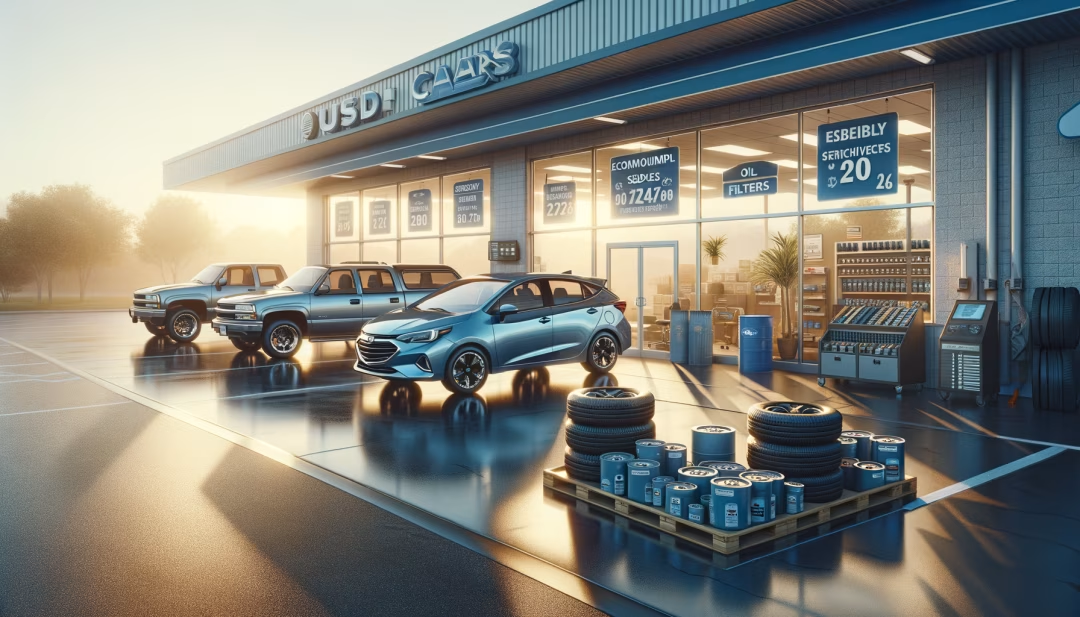
What makes a used car have the cheapest parts
Low parts pricing is mostly about scale, simplicity, and supply. High volume models from brands with decades of North American market presence enjoy robust aftermarket competition. That means more choices for brake components, filters, belts, sensors, and suspension pieces. Simple, widely used engines and transmissions further reduce prices and increase availability. Finally, vehicles that share platforms across many years and trims benefit from interchangeable parts and deeper inventories at local stores and online suppliers.
- High production volume increases aftermarket competition and reduces prices
- Shared platforms and common engines keep parts interchangeable across years
- Simple designs and easy access reduce labor time during service
- Strong owner communities and guides support low cost DIY maintenance
Models often known for cheaper parts
The following vehicle families are widely recognized for low cost consumables and readily available mechanical components. Always verify exact part numbers by year, engine, and trim before purchase, but as a starting point these lines typically deliver value.
- Toyota Corolla and Toyota Camry: Enormous parts ecosystems, long running engines, abundant brake, suspension, and sensor choices. Compare trims and years with best used cars by brand and best used Toyota Camry years.
- Honda Civic and Honda Accord: High volumes, predictable maintenance items, and a deep aftermarket. Research common picks with best used Honda Civic years.
- Ford Focus, Ford Fusion, and Ford F 150: Domestic availability, inexpensive consumables, and strong parts networks. Explore values at best selling used trucks and Ford F150 used market value.
- Chevrolet Cruze, Malibu, and Silverado 1500: Competitive pricing for brake, steering, and engine sensors with many cross compatible pieces. See best used trucks under 20000.
- Hyundai Elantra and Sonata, Kia Forte and Optima: Budget friendly aftermarket, improving reliability records, and fair pricing on core wear items.
- Nissan Sentra and Altima with common engines: Ample inventory of affordable filters, brake kits, and suspension parts.
If ultra low cost ownership is your top priority, avoid niche powertrains, rare trims, or models with limited North American support. For deeper rankings focused on operating cost, browse used cars with lowest cost of ownership and used cars with lowest repair costs.
Parts that drive ownership cost the most
Common wear items make up the bulk of ongoing expenses. Choosing a car that uses generic, low priced components and is easy to service will have an outsized impact on your budget.
- Brakes and rotors: Look for models with basic single piston calipers and common rotor sizes
- Filters and fluids: Air, cabin, oil filters, and fluid specs that are widely stocked keep prices low. See used cars with cheapest oil changes
- Suspension: Control arms, sway bar links, and struts with plentiful aftermarket choices save money
- Tires: Popular wheel sizes cost less and are easier to source. Explore used cars with cheapest tires
- Sensors: Mass airflow, oxygen sensors, and wheel speed sensors that are shared across model years are cheaper
How to compare parts prices before you buy
Create a quick shopping list and price it across two or three national retailers. Use actual part numbers for the year and engine you are considering. Price the following basket to get a reliable snapshot of maintenance expenses over the next two years.
- Front pads and rotors, rear pads or shoes and rotors or drums
- Engine air filter, cabin air filter, oil filter and oil type
- One strut or shock, one lower control arm or ball joint, sway bar links
- One oxygen sensor and one wheel speed sensor
- One tire in the stock size and a budget friendly brand
Compare totals across two vehicles on your shortlist. If one totals significantly less for this basket, it likely carries cheaper parts for most future services. To build a full ownership picture, factor in fuel from used cars with high mpg and insurance from used cars with lowest insurance rates.
Newer does not always mean cheaper
Later model years can add advanced driver aids, turbocharging, or electric power steering components that increase parts prices. While these features improve comfort and safety, they can raise costs when out of warranty. If you want the cheapest parts, prioritize naturally aspirated engines, non adaptive suspensions, and common wheel sizes. Browse comparative safety picks at used cars with best safety ratings to balance safety and simplicity.
DIY potential and community support
Two cars with similar parts prices can have very different real world costs if one is much easier to work on. Models with open engine bays and strong online guides save time during routine services. Look for large enthusiast communities, abundant how to videos, and official service intervals that favor straightforward maintenance. For inspection help, see used car inspection checklist. If you prefer professional service, you can set up maintenance with schedule service and use used car warranty guide to understand coverage choices.
When trucks and SUVs still keep parts costs down
Full size trucks and many body on frame SUVs can be economical to maintain when they use mainstream V6 or V8 engines and common brake and suspension hardware. Domestic trucks, in particular, have deep parts catalogs and healthy aftermarket support that keeps prices competitive. If you need capability on a budget, explore best used trucks for work, best used vehicles for towing, and fuel focused picks at used trucks with best fuel economy.
Hybrids and electric vehicles
Hybrids and electric vehicles excel at fuel savings, but some components are specialized and may not qualify as the cheapest parts. Many wear items like brakes and tires are still reasonably priced, and regenerative braking can extend pad life. Battery and power electronics are the cost wild cards. If you are open to a higher tech option, compare total operating expenses at used cars with lowest total operating cost and browse picks like best used hybrid cars and best used electric vehicles.
Budget planning tips for low cost ownership
- Choose models with high parts availability and simple drivetrains
- Check maintenance history and confirm that major services are up to date
- Price a standard basket of wear items before you buy to compare real costs
- Align wheel and tire sizes with widely stocked options for lower pricing
- Consider extended coverage only after reading extended warranty for used cars
Compare by use case
Your daily routine matters. Commuters should pair cheap parts with excellent fuel economy. Families may prioritize safety features and long lifespan components. Work truck buyers care about common tow and haul parts. The links below can help refine your shortlist.
- Commuting and fuel: best used cars with good gas mileage, best used cars for commuters
- Family and space: best used family cars, best used 3 row suvs
- Durability and lifespan: used cars with longest lifespan, used cars that last over 200000 miles
Financing and ownership tools
Once you have identified a low parts cost model, align the purchase with a smart plan. Use payment options to compare terms, apply online through applications, and schedule a hands on evaluation with schedule a test drive. If you have a vehicle to exchange, estimate your equity with value my trade. For broader learning, visit the blog, meet the team at meet our staff, and review policies at privacy policy and terms.
Helpful research links
Frequently asked questions about used cars with the cheapest parts
High volume compacts and midsize sedans like Toyota Corolla, Toyota Camry, Honda Civic, Honda Accord, Ford Focus, Ford Fusion, Chevrolet Cruze, and Hyundai Elantra typically offer the lowest prices on brakes, filters, suspension pieces, and common sensors due to strong aftermarket support.
Look up exact part numbers by VIN or by year, make, model, and engine. Price a basket of pads, rotors, filters, a strut, a control arm, and one oxygen sensor across two national retailers. This method reveals reliable differences between candidates on your shortlist.
Quality aftermarket parts from reputable brands are a proven way to save. Focus on brake components, filters, suspension wear items, and non critical sensors. For safety systems, complex electronics, or unique driveline parts, many owners prefer OEM. Always confirm fitment and warranty details.
Yes. Domestic trucks and mainstream body on frame SUVs with common engines and brakes often have very competitive aftermarket pricing. Tires can be larger and more expensive, so confirm wheel sizes. See best used trucks for work and best used suvs for options.
Fuel economy, insurance, reliability, and depreciation all matter. Balance parts savings with efficiency and durability. Start with used cars with high mpg, used cars with lowest insurance rates, and most reliable used cars to build a complete picture.
Next steps
Explore current options in our used inventory, compare sold examples at sold inventory, and deepen your research on the research page template. If you have questions, reach out through contact us or learn more about our team on about us. When you have chosen a model that pairs affordable parts with your daily needs, set a time for a closer look on schedule a test drive and plan service intervals with schedule service.
Office Hours
Monday
Tuesday
Wednesday
Thursday
Friday
Saturday
9:00 am - 5:00 pm
9:00 am - 5:00 pm
9:00 am - 5:00 pm
9:00 am - 5:00 pm
9:00 am - 5:00 pm
Closed
